Fused Silica Sand, Grains & Powder
Choose by form, grade and particle size. Every grade is visually sorted from the fused ingot, sized to your specification, and shipped with a COA that matches what you ordered.
Three forms, one controlled process
Grains, sand and powder come from the same graded ingot, processed on two dedicated lines — so chemistry stays consistent across every form you buy.
Grains & Sand
Crushed and screened for refractory mixes, gunning and casting stucco.
- Mesh: 4-10, 10-20, 20-50, 50-100
- Millimetre: 0-1 mm, 1-3 mm
- Dust-free (classified) option for shell stucco
- Line: Barmac crusher → impact mill → long-screen → classifier
Flour & Powder
Fine material for shell slurry, coatings, EMC and ceramic bodies.
- Mesh: 120, 200, 325 and finer
- -200 mesh, -325 mesh micro-powder
- PSD verified by Malvern (D10 / D50 / D90)
- Iron-free grinding — alumina-ceramic media & linings
Custom Specification
When your process needs a specific cut, we blend and re-check to it.
- Targeted PSD curves, custom mesh cuts
- Blending, re-weighing (+2%) and packing
- 25 kg bags / 1 t jumbo bags
- HS code 32074000 (sand & powder)
What Grade A, B and C actually mean — and why grading matters to your yield
Grading is visual and manual after the ingot cools: workers break it into 3-10 cm pieces and sort by transparency, black spots and cristobalite. Machine vision cannot reliably separate the defects that change end-use performance, so this step stays human. The result: the grade you pay for is the grade you get.
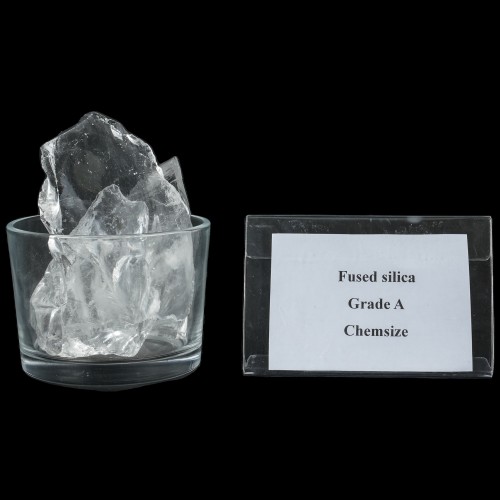
- Fully transparent
- No black spots, no cristobalite
- 1-2 cloudy lines acceptable
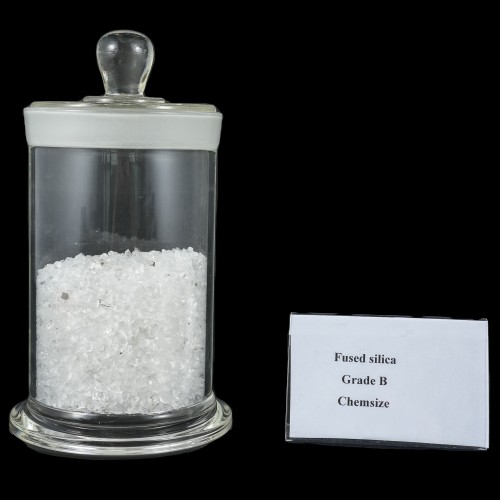
- Minor black spots
- Thread-like black lines possible
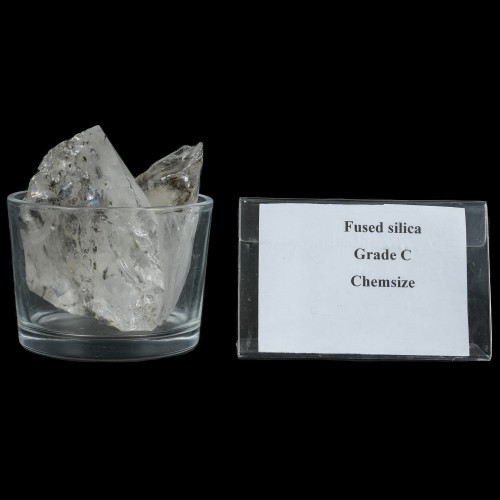
- Larger black lines or patches
- May contain cristobalite pieces (C-/D)
Grade A vs. the industry baseline — where we actually beat the majors
Mainstream fused silica datasheets from leading international brands commonly cluster around SiO₂ ≥99.7% and Fe₂O₃ ≤350 ppm. Chemsize Grade A sits measurably above that line.
| Parameter | Typical international industry baseline | Chemsize Grade A |
|---|---|---|
| SiO₂ | ≥ 99.7% | > 99.9% BEATS up to 99.96% by some laboratories |
| Fe₂O₃ | ≤ 350 ppm | < 50 ppm BEATS |
| Amorphous content | Not uniformly disclosed | > 99% (SGS) |
| Powder grinding | Al₂O₃ pickup up to 3000-4000 ppm disclosed for some powders | Iron-free: alumina-ceramic media & linings, controlled pickup |
* SiO₂ figures vary with test method and laboratory; we state the method and lab with every COA. Baseline figures reflect typical values published on leading international datasheets.
Iron-free grinding: Fe₂O₃ on the COA is Fe₂O₃ in your batch
Powder is ground in a ball mill with alumina-ceramic grinding media and alumina-ceramic linings. No steel contact means iron is not added back during processing — the chemistry of the ingot carries through to the final powder.
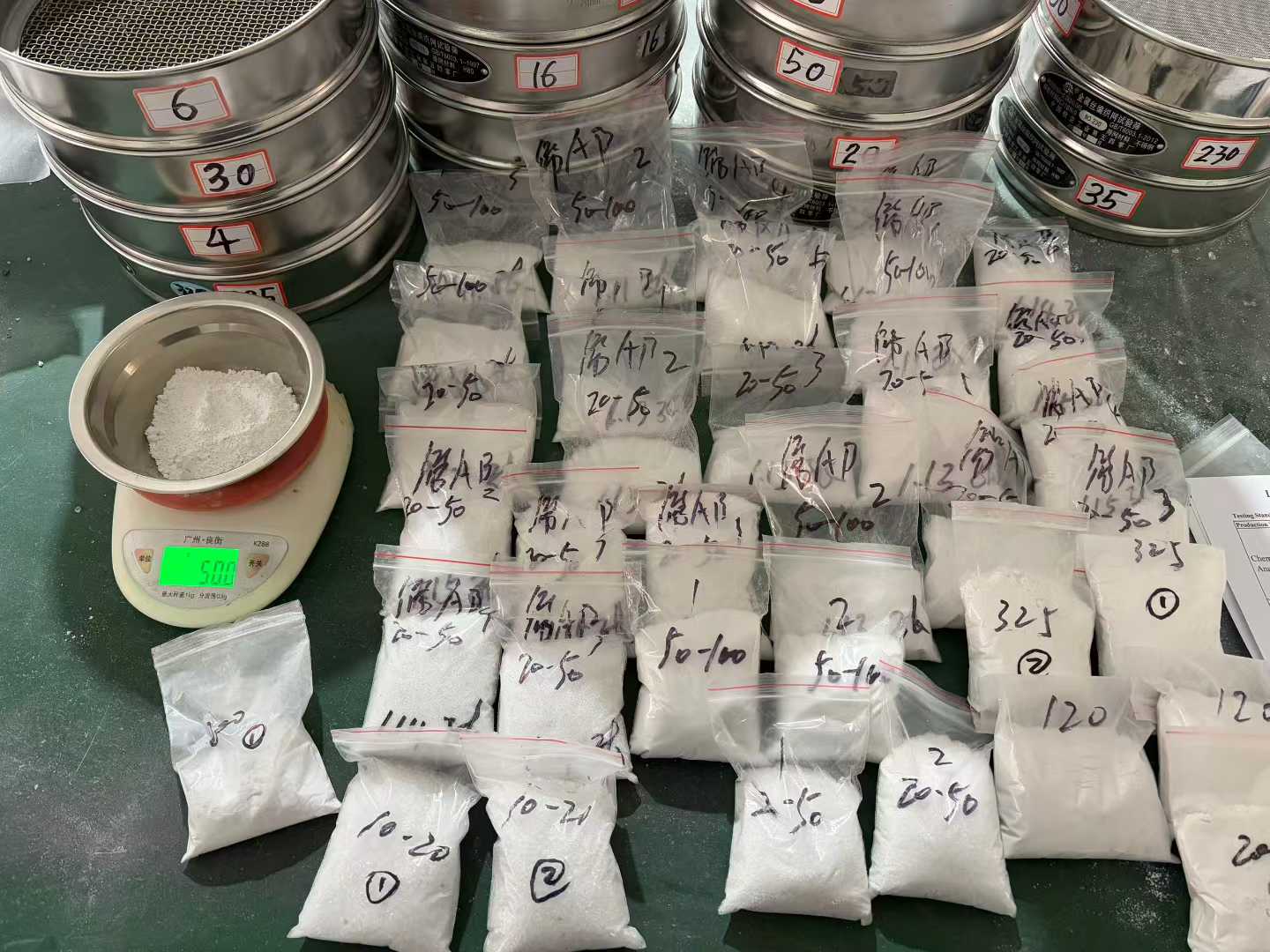
Every batch then passes the finishing plant's 12-step QC engineering table: blending, re-weighing (+2%), sieving checks and final packing. Before shipment, every batch is sampled and tested — XRF/ICP chemistry, Malvern PSD plus standard sieves, whiteness, pH, moisture — and the COA matches your purchase specification.
Quick answers buyers ask before specifying
How are grades A, B and C distinguished?
Manually by visual inspection after cooling — transparency, black spots and cristobalite. Grade A is fully transparent, no black spots, no cristobalite; B has black spots or thread-like lines; C has larger patches and may carry cristobalite. This step is manual because machine vision cannot reliably tell the defects apart.
What mesh sizes can you supply?
Standard foundry/refractory fractions such as 30-50, 50-100 and 100-200 mesh, plus fine powders like -200 and -325 mesh. Sizes are matched to your specification and confirmed by standard sieves and Malvern PSD analysis.
What does "dust-free" sand mean?
The sized sand is passed through a classifier that pulls out fine dust — required by investment foundries for stucco and slurry, because dust disturbs shell quality. It is not a clean-room step at the melting stage.
Do you test every batch before shipment?
Yes. Every batch is sampled and tested before shipment, and we issue a COA matching your purchase specification — not spot-checked, not once a month.
Tell us your mesh, grade and volume
We'll confirm the PSD, chemistry target and lead time, and send a COA-matched quotation.
Request a Specification